
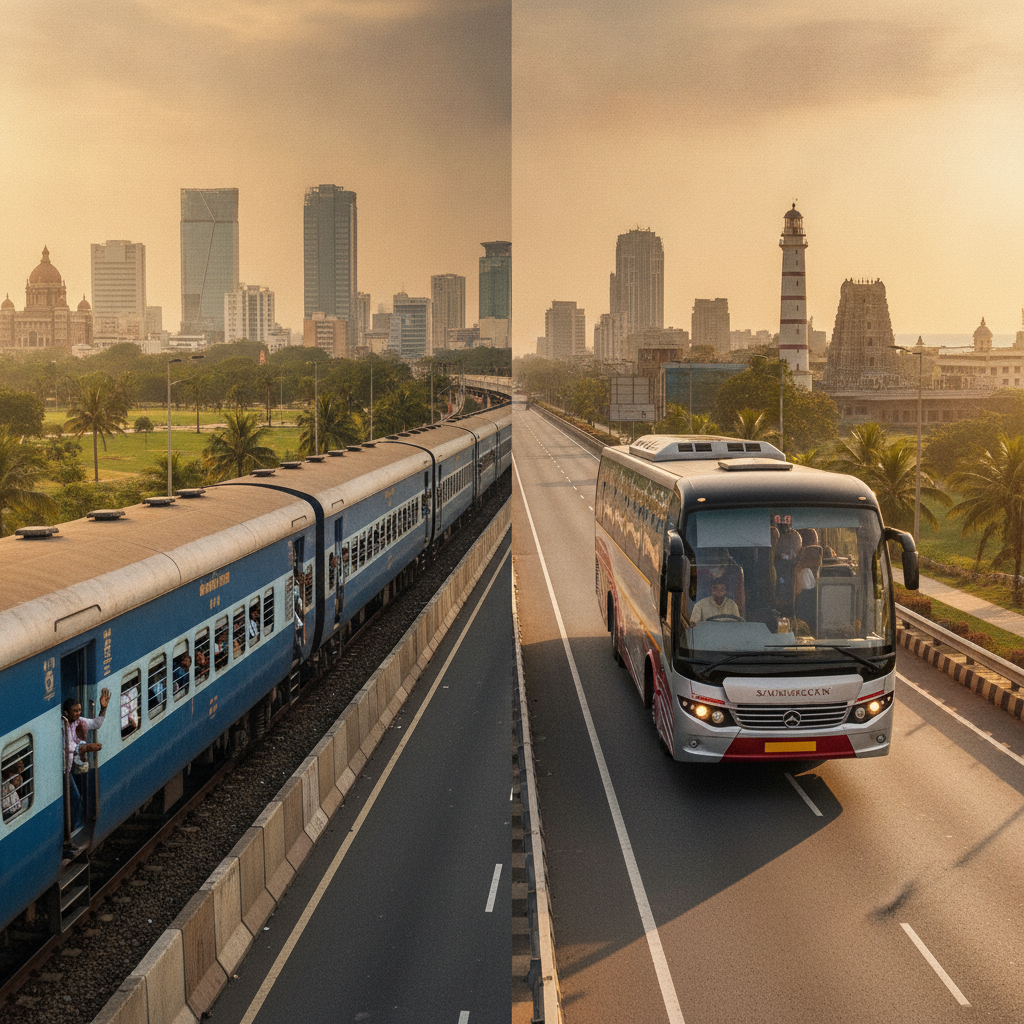
Bangalore to Chennai: Train vs. Bus – Which is Best for Your Journey?
Planning a trip from Bangalore (Bengaluru) to Chennai is a common travel scenario, whether for business, family visits, or a weekend getaway. The two major modes of transport connecting these bustling South Indian metros are trains and buses. Each has distinct advantages and disadvantages, and choosing the 'best' option depends heavily on your priorities: comfort, cost, time, convenience, and booking flexibility.
This comprehensive guide will break down everything you need to consider, from travel time and ticket prices to comfort levels and practical tips, helping you make an informed decision for your next Bangalore to Chennai journey.
Understanding Your Travel Priorities
Before diving into the specifics of trains and buses, take a moment to consider what matters most to you for this trip:
- Comfort: Do you prefer to stretch out and sleep, or are you fine with a seat for the duration? Trains often provide more space, especially in sleeper classes or AC coaches.
- Time: Are you in a hurry, or do you have flexibility? Bus journey times can sometimes be quicker due to direct routes, while trains might be delayed or have more stops.
- Cost: Are you on a tight budget, or is comfort worth a premium? Ticket prices can vary significantly between modes and classes.
- Convenience & Flexibility: Do you need frequent departure options or last-minute booking? Buses generally offer more choices and immediate availability.
- Luggage: Do you have a lot of baggage? Trains usually have more generous luggage allowances.
- Journey Experience: Do you enjoy the rhythmic sway of a train or prefer the straightforward road journey?
Once you have a clearer idea of your priorities, comparing the specifics of train and bus travel becomes much easier.
Train Travel from Bangalore to Chennai
Train travel from Bangalore to Chennai offers a classic Indian journey experience. It's often favored for its comfort, especially for overnight travel.
Journey Details
- Distance: Approximately 360-390 km by rail, depending on the route.
- Main Stations: In Bangalore, trains primarily depart from KSR Bengaluru City (SBC), Yesvantpur Junction (YPR), and Bangalore Cantt (BNC). In Chennai, trains primarily arrive at Chennai Central (MAS) and Chennai Egmore (MS).
- Travel Time: Typically ranges from 5.5 to 7.5 hours for Express and Superfast trains. Some passenger trains may take longer.
- Frequency: Multiple daily trains, including day and overnight options, making it a fairly frequent route.
Advantages of Train Travel
- Comfort: For overnight journeys, sleeper class (SL), 3A (AC 3-tier), 2A (AC 2-tier), and 1A (AC First Class) coaches offer berths for sleeping. You can stretch your legs and walk around, which is a significant advantage over buses.
- Space: More legroom and overall space compared to bus seating.
- Amenities: Most trains have on-board catering or pantry car services (food can be purchased), and toilets are available.
- Cost-Effective (for Sleeper): Sleeper class tickets are often very economical, especially when booked in advance.
- Less Susceptible to Traffic: While trains can face delays, they are not impacted by road traffic congestion, which is a major factor on highways.
- Scenic Views: Depending on the time of day, you might enjoy different landscapes.
Disadvantages of Train Travel
- Advance Booking Required: Confirmed train tickets, especially in popular classes, often need to be booked weeks or even months in advance. Last-minute tickets are hard to come by, particularly on weekends or during peak seasons.
- Station Accessibility: Train stations (KSR Bengaluru and Chennai Central) are usually large and can be crowded, requiring additional travel time and effort to reach from your exact location and then depart from upon arrival.
- Potential Delays: While not affected by road traffic, trains can be delayed due to technical issues, track work, or other operational reasons.
- Slower (in some cases): While comfortable, the overall door-to-door travel time might be longer once you account for travel to/from stations and potential delays.
- Limited Directness: Trains run on fixed routes between stations, which might not be as convenient as bus drop-off points closer to your final destination.
Popular Train Options
Some popular trains on this route include:
- Shatabdi Express (12007/12008): A popular day-time, fully air-conditioned superfast train. Fastest option, but offers only chair car seating (CC, EC).
- Lalbagh Express (12608): Another popular day express, good for morning departures.
- Brindavan Express (12640): An older but reliable day express.
- Chennai Mail (12622): A popular overnight option.
- Kaveri Express (16022): An overnight train with sleeper and AC coaches.
Always check the latest schedules and availability on the IRCTC website or authorized ticketing platforms.
Bus Travel from Bangalore to Chennai
Bus travel is an incredibly popular choice for the Bangalore-Chennai route, mainly due to its flexibility, frequency, and often faster journey times on well-maintained expressways.
Journey Details
- Distance: Approximately 330-350 km by road via NH44/NH48 and NH7/NH 16.
- Main Boarding Points in Bangalore: Madiwala, Shantinagar, Majestic, Electronic City, Silk Board, Indiranagar, Marathahalli, Anand Rao Circle. Most operators have multiple pickup points.
- Main Drop-off Points in Chennai: Koyambedu CMBT, Central Bus Stand, Sholinganallur, Perungalathur, Pallavaram, Guindy, etc. Many operators offer various drop-off locations across the city.
- Travel Time: Typically ranges from 5.5 to 7.0 hours for AC Sleeper/Seater buses, depending on traffic and stops. Non-AC buses might take slightly longer.
- Frequency: Extremely high frequency, with departures every 15-30 minutes during peak hours, especially in the evenings.
Advantages of Bus Travel
- Flexibility and Frequency: Buses run almost continuously, especially in the evenings and nights. You can almost always find a bus last minute.
- Multiple Boarding/Drop-off Points: With numerous pick-up and drop-off points across both cities, buses offer excellent last-mile connectivity, potentially saving you time and money on local transport.
- Faster Travel Time (sometimes): Due to direct highway routes and fewer stops, some luxury buses can complete the journey quicker than slower passenger trains.
- Variety of Options: A wide range of buses are available, from basic non-AC seats to luxurious multi-axle AC sleepers and semi-sleepers, catering to all budgets and comfort preferences.
- Easy Booking: Tickets can be booked easily online via various platforms, often even a few hours before departure.
Disadvantages of Bus Travel
- Comfort: While AC sleeper buses offer good comfort, they might not match the spaciousness of a train berth. Seater buses can be less comfortable for longer journeys, especially for taller individuals. The road journey can also be bumpy at times.
- Traffic Dependence: Buses are highly susceptible to road traffic, particularly within city limits in Bangalore and Chennai, which can lead to significant delays.
- Restricted Movement: You are generally confined to your seat for the entire journey, with limited opportunities to stretch your legs.
- Luggage Space: While storage is available, it might be less generous than train luggage compartments. Very large or numerous bags could be an issue.
- Motion Sickness: Some travelers are prone to motion sickness on bus journeys, which is less common on trains.
Popular Bus Operators and Types
Many private operators (e.g., KPN Travels, SRM Transports, Kallada Travels, SRS Travels) and state-run transport corporations (KSRTC, TNSTC) ply this route. Common bus types include:
- AC Sleeper: Individual sleeping berths, best for overnight comfort.
- AC Semi-Sleeper: Reclining seats, good comfort for day or night travel.
- AC Seater: Standard push-back seats, often found in Volvo or Scania buses.
- Non-AC Seater/Sleeper: More budget-friendly options, but less comfortable in warmer weather.
Comparison: Train vs. Bus
Here’s a head-to-head comparison to help summarize the differences:
| Feature | Train | Bus |
|---|---|---|
| Comfort | High (especially sleeper/AC coaches) | Variable (AC sleeper > AC seater) |
| Travel Time | 5.5 - 7.5 hours (fixed route) | 5.5 - 7.0 hours (traffic dependent) |
| Cost | Low (Sleeper) to High (1A/EC) | Low (Non-AC) to Medium (AC Sleeper) |
| Flexibility | Low (advance booking essential) | High (frequent departures, last-minute options) |
| Convenience | Station-to-station, requires local travel | Multiple pickup/drop-off points |
| Luggage | More generous allowance | Moderate, limited by space |
| Delays | Operational/technical, less traffic-prone | Highly traffic-dependent |
| Amenities | Toilets, pantry car (on some) | Rest stops (on longer journeys), no toilet on board for many buses |
| Booking | IRCTC, authorized apps/websites | Various online aggregators, operator websites |
Which Option is Best for You?
-
Choose the TRAIN if:
- You prioritize comfort and prefer to lie down and sleep during an overnight journey.
- You have booked well in advance and your dates are fixed.
- You are traveling with family or a lot of luggage.
- You prefer a more stable, less bumpy ride.
- You are budget-conscious but don't mind booking a sleeper class ticket in advance.
-
Choose the BUS if:
- You need flexibility and might be booking last minute.
- You prefer multiple boarding/drop-off options closer to your origin/destination.
- You want potentially faster door-to-door travel, factoring in last-mile connectivity.
- You're traveling during the day and don't require sleeping berths.
- You are looking for frequent departures throughout the day and night.
Common Mistakes Travelers Make
- Not Checking Real-time Status: Always check IRCTC or relevant bus operator websites for live train running status or bus delays, especially during adverse weather or festive seasons.
- Ignoring Travel to/from Stations/Stops: Don't just factor in the journey time; account for the time and cost to reach your Bangalore boarding point and from your Chennai drop-off. Majestic bus stand and KSR Bengaluru City station are hubs, but Madiwala or Electronic City might be more convenient from South Bangalore.
- Booking Only Sleeper Class on Trains: If traveling alone or unsure about fellow passengers, consider AC classes for added security and comfort, especially for women travelers.
- Underestimating Traffic: Bangalore and Chennai are notorious for traffic. A 6-hour bus journey can easily become 8 hours if you hit peak hour traffic within city limits. Plan your boarding and alighting times carefully.
- Relying on On-the-Spot Tickets for Trains: Unless you're in a Tatkal window and highly lucky, getting a confirmed train ticket on the day of travel is often impossible for this route.
Conclusion
The Bangalore to Chennai corridor is well-served by both trains and buses, each offering unique advantages. For planned trips where comfort and the option to sleep are priorities, trains, especially overnight services with AC coaches, are an excellent choice. However, if flexibility, frequent departures, and convenient pickup/drop-off points are your main concerns, then the extensive network of private and state-run buses will likely serve you better. Evaluate your personal travel preferences against the details provided, and you'll easily find your ideal way to journey between these two great South Indian cities.