
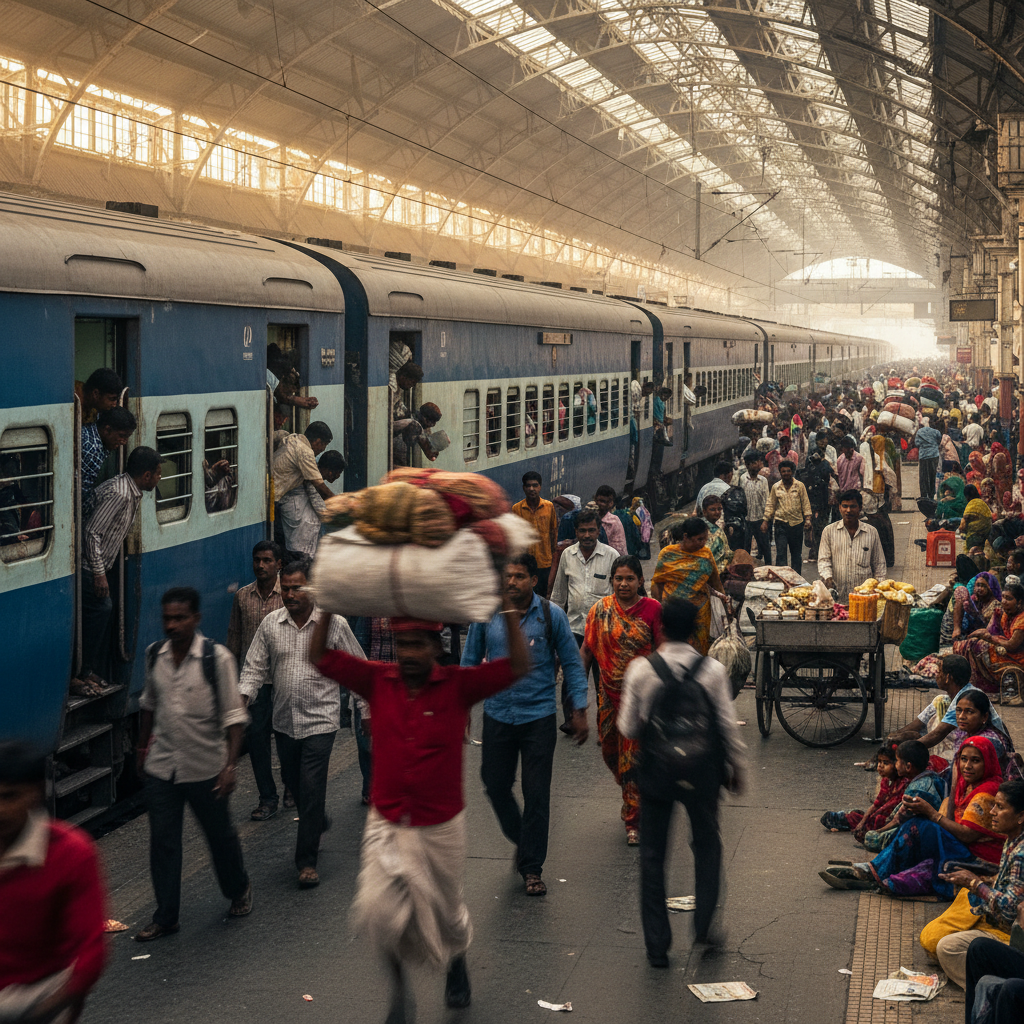
How to Secure Confirmed Train Tickets in India: A Comprehensive Guide
Booking train tickets in India, especially for popular routes or during peak seasons, often feels like a competitive sport. With millions relying on the Indian Railways for daily commute and long-distance travel, securing a confirmed seat can be a daunting task. This guide will walk you through the various strategies and insider tips to maximize your chances of getting a confirmed ticket, ensuring a smooth journey across the country.
From understanding booking windows and different quotas to navigating waitlists and exploring alternative options, we cover everything you need to know. Whether you're a seasoned traveler or planning your first train trip in India, these insights will help you travel with greater certainty.
Understanding the Basics of Indian Railway Bookings
Before diving into strategies, it's crucial to understand the fundamental aspects of train ticket booking in India. The system is complex, with various classes, quotas, and rules designed to manage demand across a vast network.
Booking Window: Plan Ahead for Best Chances
The most straightforward advice for securing a confirmed ticket is to book as early as possible. Indian Railways generally opens reservations 120 days in advance (excluding specific trains like Gatimaan Express and special holiday trains, which might have shorter booking windows). For popular routes like Delhi–Mumbai (NDLS–LTT/CSMT) or Mumbai–Goa, tickets can sell out within minutes, particularly in AC classes.
- Booking Early: Aim to book exactly 120 days before your journey date, especially for long-distance travel, during festivals (Diwali, Holi, Durga Puja), or for popular tourist destinations.
- Flexibility: If your dates are flexible, check availability on weekdays or during off-peak seasons, which usually have lower demand.
Types of Tickets: Confirmed, RAC, and Waitlist
When you book a ticket, it can fall into one of three primary statuses:
- Confirmed (CNF): This is the ideal status, guaranteeing you a specific berth and seat number for your journey. You can board the train without any worries.
- Reservation Against Cancellation (RAC): An RAC ticket means you are allotted a specific seat number, but it's often a side lower berth shared with another RAC passenger. If confirmed berths become available due due to cancellations after chart preparation, RAC passengers are moved to confirmed status and assigned full berths. You are allowed to board the train with an RAC ticket.
- Waitlisted (WL): A waitlisted ticket means you do not have a confirmed berth or seat yet. You are on a waiting list, and your ticket will only get confirmed if enough passengers cancel their tickets from confirmed or RAC lists. If your ticket remains waitlisted after chart preparation (usually 4 hours before departure) and is not moved to RAC or confirmed, you are NOT allowed to board the train. Such tickets are automatically cancelled, and a refund is initiated.
Indian Railways displays various waitlist types, such as GNWL (General Waitlist), PQWL (Pooled Quota Waitlist), RLWL (Remote Location Waitlist), etc. GNWL has the highest chance of confirmation.
Tried and Tested Strategies for Confirmed Tickets
1. Book as Early as Possible (120-Day Window)
As mentioned, this is your golden rule. Log into the IRCTC website or app precisely when the booking window opens for your desired travel date. For instance, if you want to travel on October 1st, booking opens on June 3rd (120 days prior). Be quick, especially for AC classes.
2. Utilize the Tatkal Quota
Tatkal is a special quota introduced by Indian Railways for passengers who need to travel at short notice. Tickets under this quota open one day in advance of the journey date, excluding the journey date. For AC classes, Tatkal booking opens at 10:00 AM, and for non-AC classes, it opens at 11:00 AM.
- Be Prepared: Fill in all passenger details before 10 AM/11 AM in advance using the 'Master List' feature on IRCTC. This saves crucial time during booking.
- Fast Internet: A strong internet connection is vital as Tatkal tickets sell out in minutes, sometimes even seconds.
- Payment Gateway: Choose UPI or net banking (if your bank usually has fewer issues) for faster payment processing.
- One PNR per request: Tatkal usually allows only one PNR to be booked per user ID per day for specific train numbers. Also, only a maximum of four passengers can be booked on one Tatkal ticket.
3. Consider RAC Tickets and Their Confirmation Prospects
If you get an RAC ticket, don't despair. You are guaranteed to travel, even if it's on a shared side berth initially. The chances of an RAC ticket converting to confirmed status are quite high, especially for long-distance trains, after the final chart preparation. Many last-minute cancellations occur, freeing up berths.
4. Monitor Waitlist Status and Predict Confirmation
For waitlisted tickets, continuously monitor their status. Several third-party apps and websites offer waitlist prediction services based on historical data. While not guaranteed, they can give you a fair idea of your chances.
| Factor | Higher Confirmation Chance | Lower Confirmation Chance |
|---|---|---|
| Waitlist Type | GNWL (General Waitlist) | PQWL, RLWL, CKWL (Tatkal WL) |
| Waitlist Number | WL 1-20 (Depending on class/train) | WL 50+ |
| Booking Time | Months in advance | Last minute |
| Travel Season | Off-peak, weekdays | Peak season, festivals, weekends |
| Train Type | Trains with many coaches | Trains with fewer coaches |
5. Explore Nearby Stations and Alternative Routes
Sometimes, your desired origin or destination station might be fully booked. Check for trains originating or terminating at stations a short distance away from your primary choice. For example, if you can't find a direct train from Mumbai CST (CSMT) to Delhi, check for trains from Mumbai LTT (Lokmanya Tilak Terminus) or Mumbai Bandra Terminus (BDTS) to Delhi, or even trains to stations like Hazrat Nizamuddin (NZM) or Delhi Cantt (DEC), which are also in Delhi.
Similarly, if a direct route is completely booked, consider breaking your journey into two legs. For instance, instead of Delhi to Varanasi (NDLS–BSB) directly, you might find tickets from Delhi to Lucknow (NDLS–LKO) and then a connecting train or bus from Lucknow to Varanasi.
6. Opt for Less Popular Trains or Classes
- Lower Classes: While AC classes (1A, 2A, 3A) are comfortable, they also fill up fastest. Consider booking in Sleeper Class (SL) or even unreserved (General) class if comfort is secondary to reaching your destination.
- Less Popular Trains: Indian Railways operates multiple trains on similar routes. Some trains might have inconvenient timings or take longer, making them less popular. These often have more availability. Research all available trains for your route.
7. Consider Premium Tatkal
For routes with extremely high demand, Indian Railways offers a 'Premium Tatkal' quota. These tickets are dynamically priced, similar to airline surge pricing. While more expensive, they offer a higher chance of confirmation for last-minute travel. Availability is also limited and sells out quickly.
8. Final Chart Preparation Check
Indian Railways prepares two reservation charts for each train. The first chart is prepared typically 4 hours before the train's scheduled departure, and the final chart is prepared 30 minutes before departure. After the first chart is prepared, the status of RAC and waitlisted tickets is updated based on cancellations. Many waitlisted tickets get confirmed, and RAC tickets get full berths during this stage. Always check your PNR status online after chart preparation.
Common Mistakes to Avoid
- Waiting too long to book: Procrastination is the biggest enemy of confirmed tickets.
- Not checking all possible routes/stations: Limiting your search to only one origin-destination pair can severely restrict your options.
- Giving up on waitlist too soon: Many waitlisted tickets do get confirmed, especially GNWL with lower numbers.
- Not understanding Tatkal rules: Incorrect timings or incomplete passenger details can lead to failed Tatkal bookings.
- Buying unreserved tickets for long journeys: While allowed, it can be extremely uncomfortable and crowded for long distances, sometimes even dangerous, especially for families or individuals with luggage.
Conclusion
Securing confirmed train tickets in India requires a combination of planning, strategy, and a bit of luck. By understanding the booking system, acting promptly, and being flexible with your travel plans, you can significantly enhance your chances of a comfortable and confirmed journey. Always refer to the official IRCTC website or app for the most accurate and up-to-date information regarding bookings and train schedules.