
Festival Season Train Booking Tips for a Smooth Journey in India
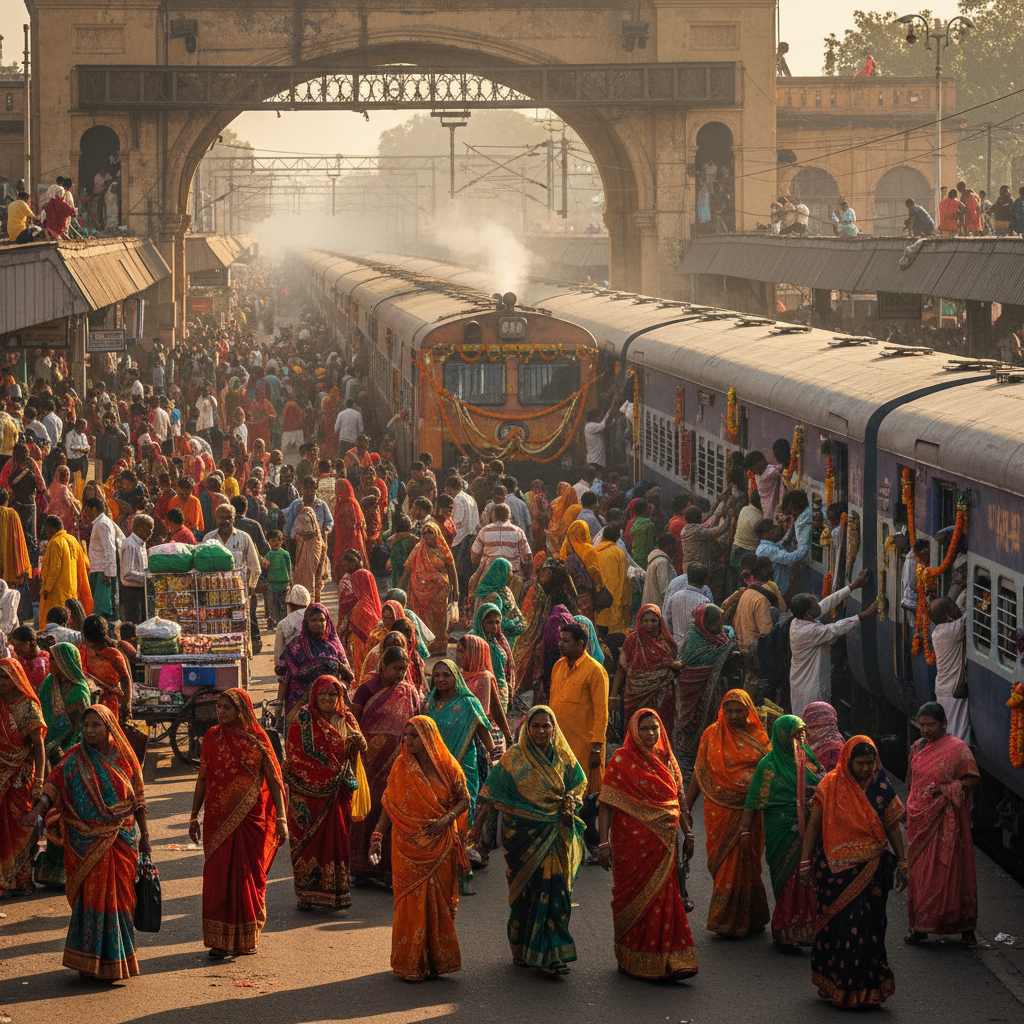
Traveling by train during India's vibrant festival season is an experience unlike any other. Whether it's Diwali, Durga Puja, Holi, or Ganesh Chaturthi, millions flock to their hometowns, making train tickets a coveted commodity. The demand far outstrips supply, leading to fully booked trains, long waitlists, and often, last-minute travel woes. To ensure your journey is filled with festive cheer rather than travel stress, understanding the intricacies of railway bookings during this peak period is essential.
This guide will provide you with practical, actionable tips to navigate the challenges of festival season train bookings in India. From when to book to how to manage waitlisted tickets and explore alternative routes, we cover everything you need to know for a smoother journey.
The Challenge of Festival Travel: Why Tickets Disappear
India's railway network is the lifeline of the nation, especially during religious and cultural festivals. The sheer volume of people traveling simultaneously creates immense pressure on the system. Here's why getting a confirmed ticket can be so difficult:
- Mass Exodus: Festivals trigger vast, synchronous migrations as people return to their native places. For example, during Diwali, routes connecting major metros like Delhi, Mumbai, Kolkata, and Chennai to smaller towns and villages see an extraordinary surge in demand.
- Limited Capacity: While Indian Railways runs special festival trains, the increase in services rarely matches the exponential rise in passenger numbers. Existing trains often run at maximum capacity, with every available berth booked within minutes.
- Advance Reservation Period (ARP): The ARP for most trains is 120 days (excluding the day of journey). For popular festival dates, tickets for key routes can sell out within minutes of bookings opening, making pre-planning crucial.
- Quota System: Indian Railways allocates seats under various quotas (General, Tatkal, Ladies, Senior Citizen, etc.). During festivals, even these quotas are quickly exhausted.
Understanding these underlying factors helps you anticipate the challenges and plan your strategy effectively.
Essential Booking Strategies for Confirmed Tickets
Securing a confirmed train ticket during festival season often feels like winning a lottery. However, with the right strategy, you can significantly increase your chances.
1. Book as Early as Possible (120 Days Out)
This is the golden rule for festival travel. As soon as the Advanced Reservation Period (ARP) opens (120 days before your travel date), be ready to book. For example, if you plan to travel on November 1st, bookings would open around July 3rd-4th.
Tip: Set a reminder well in advance. Log in to your IRCTC account a few minutes before 8:00 AM (for general bookings) or 10:00 AM/11:00 AM (for Tatkal) on the opening day. Have all passenger details saved for quick input.
2. Leverage Tatkal and Premium Tatkal Quotas
When general bookings are full, Tatkal is your next best bet. Tatkal bookings open one day in advance of the journey date, at 10:00 AM for AC classes and 11:00 AM for Non-AC classes. Premium Tatkal works on dynamic pricing, meaning fares increase as demand rises.
Strategy for Tatkal:
- Be Prepared: Ensure your IRCTC account is active, and passenger details are saved as master list members. Have multiple payment options ready (debit/credit card, UPI, net banking).
- Fast Internet: A reliable and fast internet connection is crucial. Every second counts.
- Multiple Attempts: If one train shows no availability, quickly check others. Sometimes, tickets for less popular trains or slightly different timings might be available.
- Alternative Stations: Consider booking Tatkal to/from a nearby station if your direct route is full. For instance, if Delhi to Varanasi (NDLS-BSB) is booked, check trains to Mughalsarai (DDU), a major junction close to Varanasi.
3. Explore Flexi-Fare Trains and Special Festival Services
Some popular trains, particularly premium ones like Rajdhani, Shatabdi, and Duronto, operate on a 'flexi-fare' system. While more expensive, these often have availability for a longer period. Indian Railways also runs special festival trains – keep an eye on official announcements for these.
How to find Special Trains:
- Check the IRCTC website directly for 'Special Trains'.
- Follow official Indian Railways social media accounts and news channels.
- Use railway inquiry apps that often list these special services.
4. Consider Nearby Stations as Origin/Destination
If your direct train from your primary station is fully booked, look for trains originating or terminating at nearby stations.
Example: Instead of booking from Chhatrapati Shivaji Maharaj Terminus (CSMT) in Mumbai, check if trains are available from Lokmanya Tilak Terminus (LTT), Dadar (DR), or Bandra Terminus (BDTS). Similarly, if your destination is congested, book to a major junction nearby and complete the last leg by bus or local transport.
Table: Examples of Alternate Stations
| Primary Station | Nearby Alternate Stations |
|---|---|
| New Delhi (NDLS) | Delhi Jn (DLI), Anand Vihar (ANVT), Hazrat Nizamuddin (NZM) |
| Mumbai (CSMT) | LTT, DR, BDTS |
| Kolkata (HWH) | Sealdah (SDAH), Shalimar (SHM) |
| Chennai (MAS) | Egmore (MS), Tambaram (TBM) |
5. Check Lower Booking Classes or Different Trains
Don't fixate on a single class (e.g., 2A AC). If 2A is full, check 3A, Sleeper (SL), or even unreserved (General) if it's a short journey and your only option. Sometimes, less popular trains or trains with inconvenient timings might still have berths available.
6. Book Tickets for All Passengers in One Go
Whenever possible, book tickets for all family members or groups in a single transaction. This increases the chances of getting confirmed seats together and simplifies managing your booking.
Dealing with Waitlisted Tickets
Despite your best efforts, you might end up with a waitlisted (WL) ticket. It's a common scenario during festival season. Here's a breakdown of how waitlists work and what you can do:
Understanding Waitlist, RAC, and Confirmation Odds
- Waitlist (WL): Your ticket is unconfirmed. You can only board the train if it moves to RAC or Confirmed status. If it remains WL after chart preparation, it automatically gets canceled, and a refund is initiated.
- Reservation Against Cancellation (RAC): You are allotted a seat, usually sharing a side lower berth. You can board the train. After chart preparation, if berths become vacant, RAC ticket holders may get a full berth.
- Chart Preparation: This usually happens 4 hours before the train's departure from its originating station. For early morning trains, it might be prepared the previous night. This is when final confirmations are made.
Confirmation Odds: A lower waitlist number has a higher chance of confirmation. WL 10 is better than WL 50. During festivals, high waitlist numbers (WL 50+) often remain unconfirmed.
What to do with Waitlisted Tickets
- Monitor PNR Status: Regularly check your PNR status on the IRCTC website or various railway apps. Some apps also provide confirmation probability predictions, but these are estimates and not guarantees.
- Book a Backup: If your waitlist number is high (e.g., 30+), especially for popular routes during peak festival days, it's wise to book a backup ticket on another train, route, or even consider a bus or flight if feasible and affordable. Ensure you understand the cancellation policy for your backup.
- Tatkal Strategy (as a backup): If your general waitlist looks bleak, try booking Tatkal tickets on the day before travel for your chosen route.
- Consider Partial Confirmations: If booking for multiple passengers on a single PNR, sometimes only a few tickets get confirmed while others remain waitlisted. If the entire PNR remains waitlisted after chart preparation, it gets canceled. However, if even one passenger on a PNR is confirmed, the entire PNR is not automatically canceled.
On-the-Ground Solutions and Alternatives
Sometimes, despite all planning, you're left without a confirmed train ticket. Don't despair; several alternatives can still get you to your destination.
1. Bus Travel
India has an extensive network of state-run and private bus services. During festivals, many operators add extra buses to popular routes. Buses can be a reliable and often faster alternative for shorter to medium distances.
- Booking: Book bus tickets online through platforms like RedBus, AbhiBus, or the websites of state transport corporations (e.g., MSRTC, KSRTC, APSRTC).
- Advantages: More flexible schedules, often connect smaller towns directly, and tickets can be available closer to the travel date.
- Considerations: Longer journeys can be less comfortable than trains, especially sleepless buses.
2. Carpooling or Private Taxis
For smaller groups or individuals, carpooling services (like BlaBlaCar) can be an economical option. Private taxis can also be hired, though this is generally more expensive unless splitting the cost with other travelers.
3. Splitting Your Journey
Sometimes, a direct train might be full, but you can find tickets for segments of the journey. For instance, if Delhi to Lucknow is full, you might find a train from Delhi to Kanpur, and then another train or bus from Kanpur to Lucknow. This involves more transfers but can open up possibilities.
4. General Compartment/Unreserved Travel
For very short distances or in desperate situations, traveling in the unreserved general compartment is an option, though it's typically very crowded and uncomfortable, especially during festivals. Purchase a general ticket from the counter and বোর্ড the designated general coaches.
Common Mistakes to Avoid During Festival Bookings
- Waiting Until the Last Minute: This is the biggest error. Festival tickets are generally gone within minutes/hours of booking opening.
- Not Having a Backup Plan: A waitlisted ticket, especially high numbers, is not a guarantee. Always have an alternative in mind.
- Only Checking Direct Trains: Limiting your search to only direct trains from your primary station severely restricts your options.
- Neglecting Quotas: Not fully understanding Tatkal, Ladies, or other quotas means missing potential booking windows.
- Relying Solely on Confirmation Chances: While predictive tools are helpful, they are not foolproof. Trusting them blindly can lead to last-minute cancellations.
- Booking Multiple Tickets on Different PNRs without a Plan: If two different PNRs for the same passengers yield confirmed tickets, remember to cancel one promptly to avoid cancellation charges and free up berths for others.
Conclusion
Traveling by train during India's festival season is a unique part of the cultural experience. While challenging, strategic planning, early booking, and flexibility in your travel options can significantly reduce stress and help you secure a passage to your festive celebrations. Remember to stay updated with Indian Railways announcements for special trains and changes in booking rules. Happy travels and happy festivals!