
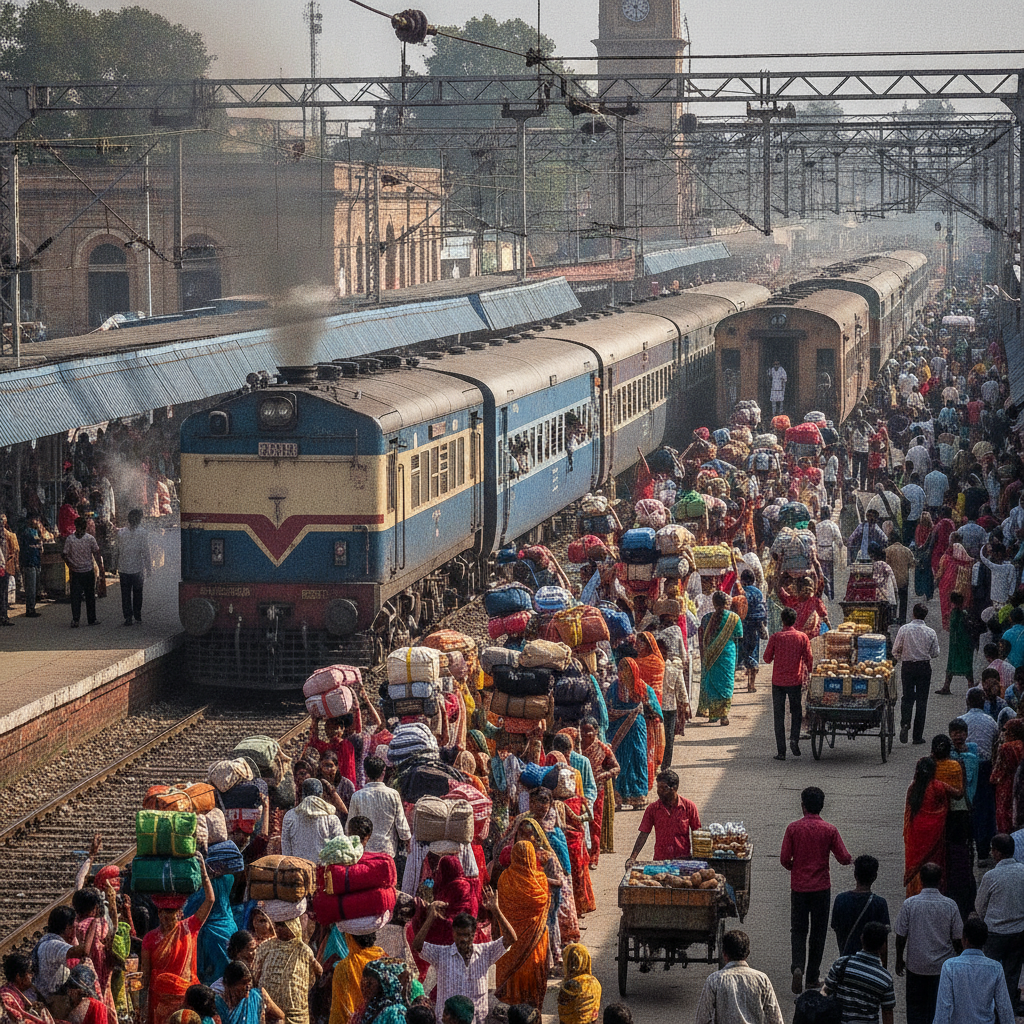
How to Plan a Multi-Leg Train Journey in India Successfully
Traveling across the vast and diverse landscape of India often requires more than a single direct train ride. Whether you're heading to a remote pilgrimage site, exploring multiple cities on an adventure, or simply can't find a direct train ticket, learning how to plan a multi-leg train journey is an essential skill for any Indian traveler. This guide will walk you through the process, helping you combine different train routes to reach your destination efficiently and with minimal hassle.
A multi-leg journey means breaking down your total travel into two or more distinct train segments. This approach can open up new possibilities when direct trains are unavailable, fully booked, or traverse inconvenient routes. While it requires a bit more planning than a direct journey, the ability to build your own itinerary offers flexibility and can often lead to discovering new places along the way.
Why Opt for a Multi-Leg Train Journey?
There are several compelling reasons why travelers choose or need to undertake multi-leg train journeys:
- No Direct Connectivity: Many smaller towns or remote destinations in India might not have direct train services from major cities. A multi-leg journey allows you to reach a well-connected junction first and then take another train.
- Waitlisted Tickets: Direct trains on popular routes, especially during peak seasons or festivals, often have long waiting lists. Breaking your journey into segments might increase your chances of securing confirmed seats on different trains.
- Cost Savings: Sometimes, combining shorter, less popular routes can be more economical than a single, long-distance direct train, especially if you have flexibility in your travel dates.
- Exploring Intermediate Destinations: A multi-leg journey provides an opportunity to stop over at an interesting city or town en route, adding depth to your travel experience.
- Better Availability of Seats: Shorter train segments or trains originating from less crowded stations might have better seat availability compared to highly sought-after direct long-haul trains.
Understanding Key Concepts for Multi-Leg Travel
Before diving into the planning, it's vital to grasp some fundamental Indian Railways concepts that impact multi-leg journeys:
- Intermediate Stations/Junctions: These are railway stations where multiple train lines intersect, allowing travelers to change trains. Major junctions like Nagpur (NGP), Mughal Sarai (DDU), or Itarsi (ET) are common transfer points for multi-leg journeys.
- PNR (Passenger Name Record): Each ticket booking, even if for multiple passengers, generates a unique PNR. For multi-leg journeys, each segment will have its own PNR, as they are separate bookings.
- Chart Preparation: The final status of tickets (Confirmed, RAC, WL) is locked at chart preparation, typically 2-4 hours before the train's scheduled departure from its originating station. For multi-leg journeys, you'll need to monitor chart preparation for each segment.
- Delay Factor: Indian trains, especially long-distance ones, can experience delays. This is the single most critical factor to consider when planning connections. Always factor in significant buffer time.
- Minimum Connecting Time (MCT): While not officially defined by IRCTC for self-planned connections, a practical MCT is the minimum time you need to comfortably change platforms and trains at a junction. This should always be more than an hour, preferably 2-4 hours for peace of mind.
Step-by-Step Guide to Planning Your Multi-Leg Journey
Planning a multi-leg journey requires diligence and attention to detail. Here’s how to approach it:
Step 1: Identify Your Origin, Destination, and Potential Junctions
- Define Your Route: Clearly establish your starting point (Origin) and final destination.
- Look for Direct Trains First: Use the IRCTC website or other railway portals to check if a direct train exists and if seats are available. If not, proceed to the next step.
- Identify Potential Junctions: Look at a railway map of India. Pinpoint major railway junctions that lie generally along your desired direction of travel. For example, if traveling from Mumbai (CSMT/LTT) to Varanasi (BSB), a junction like Itarsi (ET) or Prayagraj Chheoki (PCOI) might be suitable.
- Pro Tip: Websites like RailYatri or even Google Maps with the train layer can help you visualize junctions and routes.
Step 2: Research Train Schedules and Connectivity for Each Leg
Once you have potential junctions, research trains for each segment:
-
Leg 1 (Origin to Junction): Search for trains from your Origin to the chosen Junction. Note down train numbers, departure/arrival times, and travel duration.
-
Leg 2 (Junction to Destination): Search for trains from the same Junction to your final Destination. Again, note down train numbers, departure/arrival times, and travel duration.
-
Check for Overlap and Buffer: The most crucial step. Compare the arrival time of Leg 1 at the Junction with the departure time of Leg 2 from the same Junction. Aim for a buffer of at least 3-4 hours, especially if your first leg is a long-distance train prone to delays. If platform changes are complex, allow even more time.
- Example: If your train from Mumbai to Itarsi arrives at 10:00 AM, try to find a train from Itarsi to Varanasi that departs after 2:00 PM.
Step 3: Check Seat Availability and Book Tickets
- Assess Availability: For each selected train segment, check seat availability for your desired travel class and dates. Look for Green (Available) or Tatkal options. If you are relying on waitlisted tickets, understand the confirmation probability based on current trends.
- Book Segment by Segment: Book your tickets separately for each leg of the journey. Each booking will generate a unique PNR.
- Important Consideration: Prioritize booking the second, more critical segment first if availability is very low, as you can always adjust the first segment if needed. However, generally, it's safer to book the first leg and then the second, progressively.
Step 4: Manage Your Journey and Be Prepared for Contingencies
- Monitor PNR Status: Keep track of the PNR status for all your tickets, especially if you have waitlisted bookings. Use the IRCTC PNR status check functionality.
- Check Live Train Status: On the day of travel, actively monitor the live running status of your first train. This will give you an early indication of any potential delays impacting your connection.
- Have a Backup Plan: What if the first train is severely delayed and you miss your connection?
- Same-Day Alternatives: Identify other trains leaving from the junction to your destination later that day.
- Bus Alternatives: Check if bus services are available from the junction city to your final destination.
- Nearby Stations: Research if there are other stations near your junction that might offer alternative connectivity.
- Travel Light: With potential platform changes and less time between trains, traveling with minimal luggage makes transfers much easier.
- Familiarize Yourself with the Junction: If possible, check the railway station layout of your transfer junction online or ask locals upon arrival to know which platforms are generally used for your connecting train.
Common Mistakes to Avoid When Planning Multi-Leg Journeys
- Insufficient Buffer Time: This is the most common and critical mistake. Never underestimate railway delays. A 30-minute buffer is almost guaranteed to be insufficient.
- Ignoring Chart Preparation: Assuming your waitlisted ticket will confirm without regularly checking its status. Always have a plan B if it doesn't.
- Booking Too Early/Late: Booking too far in advance can make monitoring PNR difficult, while booking too late reduces availability.
- Not Checking Platform Numbers: At large junctions, changing platforms can take significant time, especially with luggage. Check platform indicators or ask staff immediately upon arrival.
- Overlooking Overnight Connections: While sometimes unavoidable, an overnight wait at a junction can be tiring and potentially unsafe if not planned well. Consider lodging options if you have a very long layover.
- Assuming Direct Connectivity: Always verify train routes and directness; don't rely on assumptions.
Example: Delhi (NDLS) to Panna (PNNR)
Let's consider a journey from Delhi to Panna, a town in Madhya Pradesh. Panna does not have a direct train station. The nearest major railway station is Satna (STA).
- Origin: New Delhi (NDLS)
- Final Destination: Panna (PNNR via Satna STA)
- Strategy: First train from NDLS to Satna (STA). Second leg from Satna to Panna via bus or taxi.
Leg 1: Delhi (NDLS) to Satna (STA)
- Train Options: Many trains run this route, e.g., 12190 Mahakaushal Exp, 12173 Udyog Nagri Exp, 11078 Jhelum Exp.
- Booking: Check availability and book your preferred train. Let's say you book 12190 Mahakaushal Exp, departing NDLS at ~2:30 PM and arriving at STA at ~5:00 AM the next day.
Leg 2: Satna (STA) to Panna (PNNR)
- Travel Time: Panna is about 70-80 km from Satna. Takes approximately 1.5-2 hours by road.
- Connectivity: From Satna railway station, taxis, private cabs, and state transport buses are readily available to Panna. You can usually find these just outside the station.
- Buffer: Since your train arrives early morning, you have ample time to arrange road transport. Even if the train is delayed by a couple of hours, you'll still reach Satna by morning and can proceed to Panna.
This example illustrates how combining a train journey with a bus/taxi segment is a common form of multi-leg travel in India.
Frequently Asked Questions
Q: Can I book a multi-leg journey on a single ticket through IRCTC?
A: No, IRCTC does not offer a single-ticket booking for multi-leg journeys with separate trains. Each train segment must be booked as an individual ticket, resulting in separate PNRs for each leg.
Q: What if my first train gets delayed and I miss my connecting train?
A: Unfortunately, Indian Railways typically does not compensate for missed connections due to delays unless both trains are on the same PNR (which is rare for self-planned multi-leg journeys). It's crucial to build in ample buffer time (3-4 hours minimum) between trains to mitigate this risk. In case of a miss, you'd need to book a new ticket for the onward journey or find alternative transport.
Q: Is it safer to book Tatkal tickets for multi-leg journeys?
A: Tatkal tickets can be a good option for securing confirmed seats, especially for the second leg of your journey if you have limited options. However, they are more expensive and harder to book due to high demand. Be prepared to book exactly when Tatkal opens if you rely on it.
Q: How much buffer time should I allow between connecting trains at a junction?
A: A minimum of 3-4 hours is highly recommended, especially if your first train is a long-distance service originating far away. For shorter, more punctual trains or originating trains, you might get away with 2 hours, but it's always riskier.
Q: What if I have a long layover between trains at a junction?
A: If your layover is several hours or overnight, consider using the railway retiring rooms or dormitories if available, or book a budget hotel near the station to rest. Always be cautious with your belongings and surroundings during long waits at stations.
Q: Can I combine train and bus travel for a multi-leg journey?
A: Absolutely! This is a very common and practical approach, especially for reaching destinations not directly connected by rail, as shown in the Delhi to Panna example. Many major railway stations have bus stands nearby, making the transfer seamless.
Conclusion
Planning a multi-leg train journey in India might seem daunting initially, but with a systematic approach, it can be a rewarding way to travel. By carefully selecting your routes, allowing sufficient buffer time, and understanding potential challenges, you can confidently navigate the vast Indian railway network. Always prioritize safety and flexibility, and be prepared for minor adjustments along the way to ensure a smooth and enjoyable travel experience.