
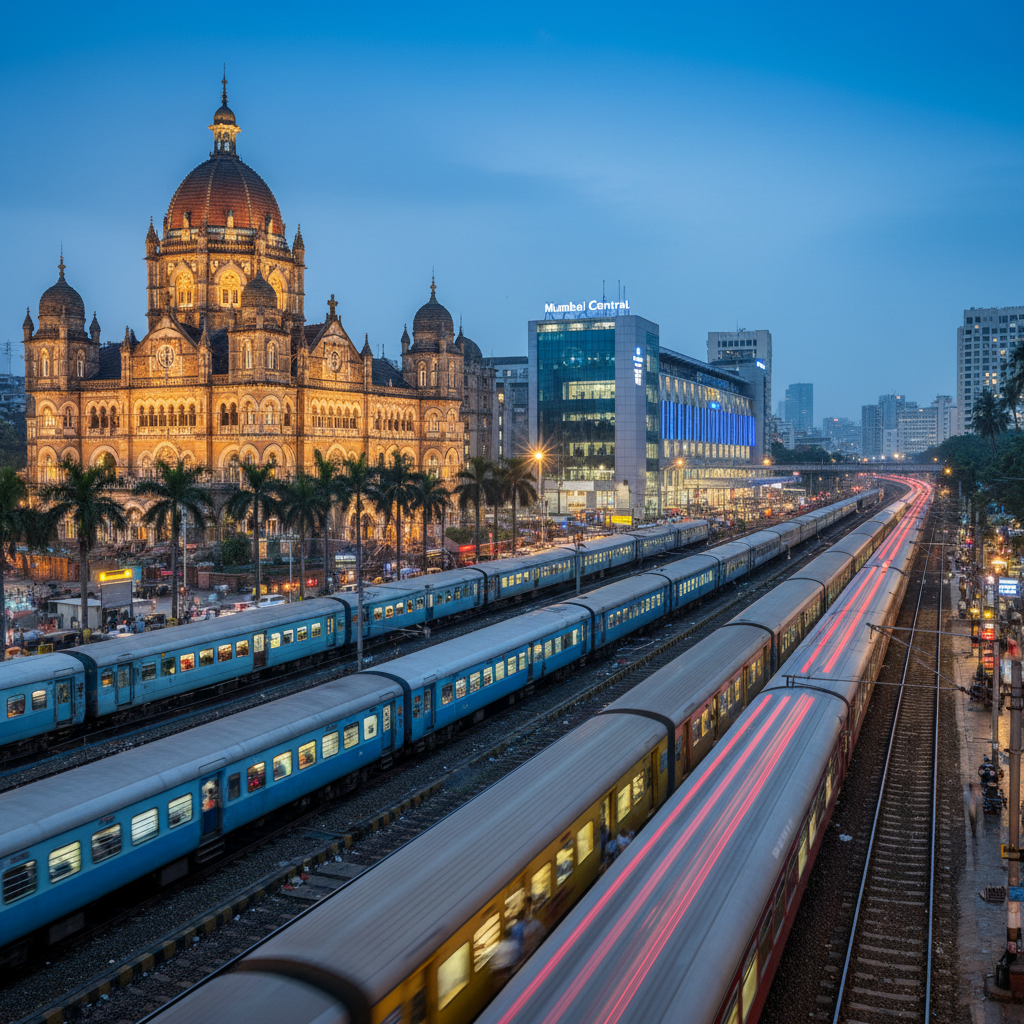
Mumbai CST vs. Mumbai Central: Understanding the Key Differences for Train Travel
Mumbai, the bustling financial capital of India, is a city served by an extensive railway network. For travelers, navigating its many stations can sometimes be confusing, especially when two major terminals bear such similar-sounding names: Mumbai Chhatrapati Shivaji Maharaj Terminus (CSMT) and Mumbai Central (MMCT). While both are crucial railway hubs, they cater to different railway zones and serve distinct travel corridors across the country.
Understanding the differences between CSMT and MMCT is essential for planning your train journey, ensuring you book the correct station, and arriving at the right place for your departure or arrival. This article will break down the key distinctions between these two iconic Mumbai railway stations.
TL;DR
Mumbai Chhatrapati Shivaji Maharaj Terminus (CSMT) and Mumbai Central (MMCT) are two of Mumbai's busiest railway stations, serving distinct regions of India. CSMT primarily handles Central Railway routes to the North, East, and South, while MMCT is the main hub for Western Railway services, connecting Mumbai to destinations in Gujarat, Rajasthan, Delhi, and beyond.
The Two Pillars of Mumbai's Railway Network
Mumbai's railway system is divided into two primary zones: Central Railway (CR) and Western Railway (WR). Each zone operates its own set of lines and major terminals. CSMT is the headquarters and a major terminal for Central Railway, while Mumbai Central is the headquarters and a primary terminal for Western Railway.
Historically, these two stations were built by different railway companies during the British Raj, leading to their distinct locations and operational zones. Today, they continue to serve as vital gateways, each with its own character and connectivity.
Chhatrapati Shivaji Maharaj Terminus (CSMT) - The Grand Dame
Station Code: CSMT (formerly VT - Victoria Terminus)
Located in South Mumbai, Chhatrapati Shivaji Maharaj Terminus is an architectural marvel and a UNESCO World Heritage Site. It's not just a railway station but a landmark, known for its Gothic Revival architecture. CSMT is the main hub for Central Railway and serves as the originating point for many long-distance trains.
Key Characteristics:
- Railway Zone: Central Railway (CR).
- Destinations Served: Trains from CSMT generally head towards destinations in North India (like Uttar Pradesh, Bihar, Delhi), East India (like Kolkata), and South India (like Chennai, Hyderabad, Bengaluru). Major routes include those to Nagpur, Bhopal, Varanasi, Howrah, Secunderabad, and Chennai.
- Local Connectivity: It's a major terminal for the Central Line and Harbour Line of Mumbai's suburban railway network, connecting passengers to various parts of the city and its eastern and southern suburbs.
- Facilities: Being a historically significant and high-traffic station, CSMT offers a wide range of facilities including waiting rooms, retiring rooms, food stalls, ATMs, and a prepaid taxi stand.
- Accessibility: Well-connected by local buses and taxis. It's also within walking distance of popular tourist attractions like the Gateway of India and Colaba.
Mumbai Central (MMCT) - The Western Gateway
Station Code: MMCT (formerly BCT - Bombay Central)
Situated in the western part of South Mumbai, Mumbai Central is another bustling terminal, crucial for connecting the city with India's western and northern regions. It is the primary station for Western Railway's long-distance services.
Key Characteristics:
- Railway Zone: Western Railway (WR).
- Destinations Served: Trains from MMCT typically run towards destinations in Gujarat (Ahmedabad, Surat), Rajasthan (Jaipur, Jodhpur), Delhi, and other parts of North India. It is famously the originating point for the prestigious Mumbai-Delhi Rajdhani Express.
- Local Connectivity: Serves as a major station on the Western Line of Mumbai's suburban railway network, connecting passengers to the western suburbs.
- Facilities: Mumbai Central is a modern and well-equipped station, featuring executive lounges, AC waiting rooms, food courts, escalators, and a wide array of passenger amenities. It also has a major railway hospital nearby.
- Accessibility: Easily accessible by local buses, taxis, and has a dedicated metro station on the Mumbai Metro Line 3 (currently under construction, partially operational).
Comparison Table: CSMT vs. MMCT
To summarize the key differences, here's a comparative look:
| Feature | Chhatrapati Shivaji Maharaj Terminus (CSMT) | Mumbai Central (MMCT) |
|---|---|---|
| Full Name | Chhatrapati Shivaji Maharaj Terminus | Mumbai Central |
| Station Code | CSMT | MMCT |
| Earlier Name | Victoria Terminus (VT) | Bombay Central (BCT) |
| Railway Zone | Central Railway (CR) | Western Railway (WR) |
| Primary Routes | North, East, South India (UP, Bihar, WB, TN, AP, MH) | West, North India (Gujarat, Rajasthan, Delhi) |
| Major Trains | Konkan Kanya Exp, Deccan Queen, Pushpak Exp, Gitanjali Exp | Rajdhani Exp, August Kranti Rajdhani, Gujarat Mail, Paschim Exp |
| Local Lines | Central Line, Harbour Line | Western Line |
| Location | South Mumbai (Fort area) | South Mumbai (Tardeo/Mahalaxmi area) |
| Nearest Landmarks | Gateway of India, Colaba, Marine Drive | Mahalaxmi Temple, Haji Ali Dargah |
| Metro Connectivity | CSMT Metro Station (Line 3, under construction) | Mumbai Central Metro Station (Line 3, under construction) |
| Architecture | Victorian Gothic Revival (UNESCO Site) | Indo-Saracenic and Modern |
Why is this distinction important for travelers?
- Booking Tickets: Always double-check the station code (CSMT or MMCT) when booking your tickets, especially online. A mistake could lead to missing your train or significant last-minute travel stress.
- Arrival/Departure Planning: Knowing which station your train uses will help you plan your local commute to and from the station. Both stations are well-connected, but their specific locations in South Mumbai mean different local transport routes and travel times.
- Connecting Journeys: If you're planning a multi-leg journey through Mumbai, understanding the station layout and connections can save you time. For instance, if you arrive at CSMT and your onward journey is from MMCT, you'll need to account for travel time across the city, which can be considerable during peak hours.
- Local vs. Long-Distance: While both stations handle local suburban trains, their primary focus on long-distance routes differs. CSMT is a major Central Railway hub, and MMCT for Western Railway. This impacts which local lines you'll need to use to reach them.
Common Mistakes Travelers Make
- Confusing the Station Codes: Many new travelers, or those unfamiliar with Mumbai, might confuse 'CST' with 'Central'. While CSMT is often still colloquially referred to as CST, the 'Central' in Mumbai Central is distinct and refers to MMCT.
- Assuming Proximity: While both are in South Mumbai, they are not immediately next to each other. Traveling between CSMT and MMCT can take 30-60 minutes by taxi or local train, depending on traffic and time of day.
- Reliance on GPS without Context: A GPS might show a similar travel time for both if you're centrally located, but understanding the specific railway zone and local line connections can make your journey smoother.
- Forgetting to Specify: When asking for directions or booking a taxi, always specify the full name or the code (CSMT or Mumbai Central MMCT) to avoid any confusion with drivers.
Getting Between CSMT and Mumbai Central
If you find yourself needing to travel between CSMT and Mumbai Central, here are your options:
- Local Train: This is often the fastest and most economical option, though it can be crowded. You would typically take a Harbour Line train from CSMT to connect with the Western Line at certain junctions, or take a short taxi/bus ride between stations after exiting the local train. A direct local train route is not straightforward.
- Taxi/Ride-sharing: Readily available outside both stations. This is the most convenient option but can be expensive and time-consuming during peak traffic hours.
- Bus: BEST (Brihanmumbai Electric Supply and Transport) buses connect various parts of Mumbai, including routes between these two stations. This is a budget-friendly option but might take longer.
Always factor in ample buffer time if you have a connecting journey requiring travel between these two stations, especially during Mumbai's infamous rush hours.
Conclusion
Mumbai CST and Mumbai Central, while both monumental railway stations in Mumbai, serve distinct roles in the Indian railway network. CSMT, with its historic grandeur, is the gateway for Central Railway services to the rest of India, whereas Mumbai Central is the modern hub for Western Railway, primarily connecting to Gujarat, Rajasthan, and Delhi. Knowing the specific services and local connectivity of each station is key to a smooth and stress-free train travel experience in Mumbai.