
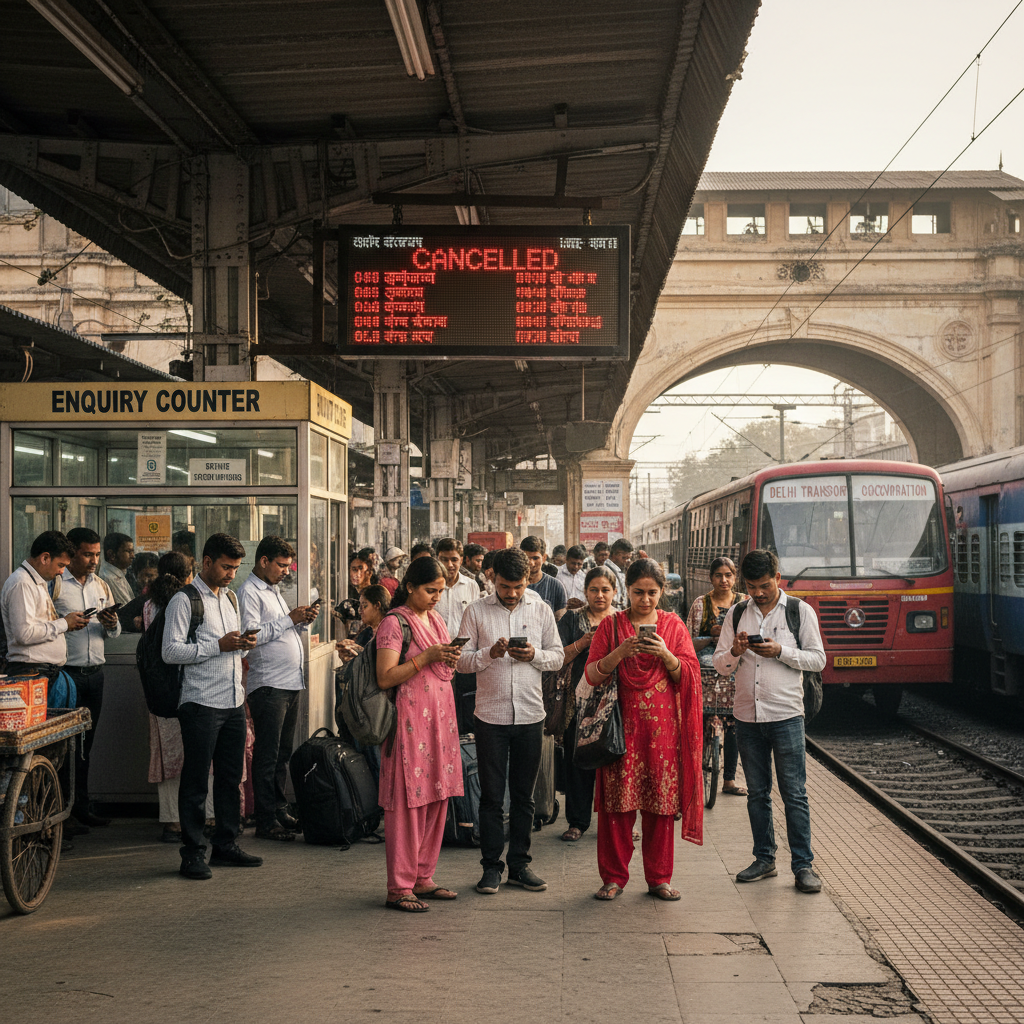
Train Cancelled? How to Find an Alternative Journey to Your Destination
Experiencing a train cancellation can be incredibly frustrating, especially when you have important plans or are on a tight schedule. In India, factors like weather conditions, track maintenance, or operational issues can lead to unexpected cancellations. When your planned journey is abruptly halted, knowing how to react and what alternatives to seek out is key to minimizing disruption and ensuring you still reach your destination.
This guide will walk you through the practical steps and strategies to find an alternative journey when your train is cancelled. We’ll cover everything from leveraging official railway resources to exploring other modes of transport, helping you make informed decisions quickly.
TL;DR
If your train is cancelled, immediately check for special trains, explore alternative trains from nearby stations, consider bus travel, or a combination of both. Staying informed via official channels is crucial for finding the best substitute journey.
Understanding Train Cancellations in India
Train cancellations in India, while inconvenient, are often a measure taken for passenger safety or operational efficiency. They can happen for various reasons:
- Weather Conditions: Heavy rains, floods, fog, or cyclones can severely impact track safety and visibility, leading to cancellations or diversions.
- Technical Glitches & Maintenance: Issues with rolling stock, tracks, or signaling systems often require immediate attention, resulting in partial or full cancellations.
- Operational Reasons: Sometimes, cancellations occur due to low passenger occupancy on a particular route, staff shortages, or protests affecting railway lines.
- Unforeseen Events: Bandhs (strikes), natural disasters, or other emergencies can also lead to widespread cancellations.
How You're Notified
Indian Railways usually attempts to inform passengers via SMS to the registered mobile number, through announcements at stations, and updates on their official website (indianrail.gov.in and IRCTC). It's always advisable to check the status of your train before heading to the station, especially during adverse weather conditions.
Immediate Steps When Your Train is Cancelled
1. Don't Panic – Gather Information
The first and most important step is to stay calm. Panic can cloud judgment. Once you're aware of the cancellation, immediately verify the information:
- Official Sources: Check the current status of your train on the NTES (National Train Enquiry System) app or website, or the IRCTC website. Look for specific details regarding the cancellation (e.g., permanent, temporary, partial).
- Railway Enquiry Counters: If you are already at the station, head to the railway enquiry counter. They can provide the most up-to-date local information and suggest immediate alternatives.
2. Understand Your Refund Options
For fully cancelled trains, Indian Railways typically offers a full refund automatically.
- E-tickets: For tickets booked online via IRCTC, the refund is usually processed automatically to the account used for booking within 3-7 working days. You do not need to file a TDR (Ticket Deposit Receipt) for a fully cancelled train.
- Counter Tickets: If you bought your ticket from a railway reservation counter, you need to surrender your ticket at any PRS (Passenger Reservation System) counter within the prescribed time limit (usually 3 days from the scheduled departure date) to claim a full refund. Keep your original ticket ready.
Knowing your refund is secure can alleviate some stress and allow you to focus on finding alternatives without financial worry.
Finding Alternative Train Journeys
Your primary goal after a cancellation is often to find another train. Here’s how to approach it:
1. Check for Special Trains or Diversions
Sometimes, Indian Railways runs special trains to accommodate passengers from cancelled services, or diverts existing trains along different routes. In rare cases, they might attach extra coaches to other services.
- Enquiry Counters: This information is best obtained directly from the railway enquiry counters or station masters.
- NTES Updates: Major special train announcements are often updated on NTES.
2. Search for Other Trains on the Same Route
Even if your specific train is cancelled, there might be other trains operating on the same route around your original departure time or slightly later.
- IRCTC Website/App: Use the IRCTC portal or app to search for trains between your origin and destination for the same date. Widen your search to include a few hours before and after your original departure.
3. Consider Nearby Stations
One of the most effective strategies is to explore alternative boarding or deboarding stations. For example, if your train from Delhi (NDLS) to Lucknow (LKO) is cancelled, you might find trains from:
- Nearby Origin Stations: Ghaziabad (GZB), Anand Vihar Terminal (ANVT), or Hazrat Nizamuddin (NZM) instead of NDLS.
- Nearby Destination Stations: Kanpur (CNB) or Bareilly (BE) might have trains, from where you can take a local train or bus to Lucknow.
This requires a bit of local knowledge or quick research on connecting transport, but it can significantly expand your options. Always check the connectivity between the alternative station and your final destination.
4. Look at Tatkal Quota
If you need to travel urgently and other options are scarce, consider booking a Tatkal ticket. Tatkal booking opens at 10:00 AM for AC classes and 11:00 AM for Non-AC classes, one day in advance of the train's departure date from its originating station.
- Be Prepared: Tatkal tickets sell out extremely fast. Have your passenger details ready and act quickly as soon as booking opens.
- Limited Availability: Not all trains have Tatkal quotas, and the number of seats is limited.
| Option | Pros | Cons | Confirmation Odds | Effort Involved |
|---|---|---|---|---|
| Same Route, Different Train | Direct journey, familiar route | Limited availability, especially last minute | Moderate | Low |
| Nearby Station (Origin) | Broadens options, potentially less crowded | May require local transport to new boarding point | Moderate | Medium |
| Nearby Station (Dest.) | Broadens options, might get you closer | Requires onward local transport from new deboarding point | Moderate | Medium |
| Tatkal Quota | Urgent travel possible | High demand, higher fare, quick booking needed | Low to Medium | High |
Exploring Alternative Modes of Transport
Sometimes, another train simply isn't an option. In such cases, you need to consider other modes of transport.
1. Bus Services
Bus travel is often the most readily available and flexible alternative to trains in India, especially for intercity routes.
- State Road Transport Corporations (SRTCs): Various state-run bus services (e.g., UPSRTC, MSRTC, KSRTC, APSRTC) operate extensive networks. They often have depots near major railway stations.
- Private Bus Operators: Many private companies offer comfortable AC and non-AC buses, including sleeper options, on popular routes. Websites and apps like RedBus, MakeMyTrip, and Goibibo are good resources for booking.
- Pros: Frequent services, often available last minute, good connectivity to smaller towns.
- Cons: Can be slower than trains, comfort levels vary, susceptible to road traffic.
2. Flights (for long distances)
For very long distances (e.g., Delhi to Bangalore, Mumbai to Kolkata), a cancelled train might make a flight a viable, albeit more expensive, alternative.
- Last-Minute Fares: Be aware that last-minute flight tickets can be costly. Check aggregator sites like Skyscanner, MakeMyTrip, or напрямую airline websites for deals.
- Time Factor: While faster in the air, factor in travel time to and from airports.
3. Car Rentals or Taxis
For shorter to medium distances, or if you're traveling with family/friends, hiring a car or taxi can be an option.
- Intercity Cabs: Services like Ola Outstation, Uber Intercity, or local taxi stands provide point-to-point travel.
- Shared Taxis: In some regions, shared taxis operate on fixed routes, which can be more economical. Inquire at local travel hubs.
- Pros: Door-to-door convenience, flexibility.
- Cons: Expensive for solo travelers, long journeys can be tiring, road conditions vary.
4. Combining Modes of Transport
Often, the best solution is a hybrid approach. For example:
- Train + Bus: Take a train to a major junction that wasn't affected by the cancellation, and then switch to a bus for the remaining leg of your journey.
- Bus + Train: Travel by bus to a city with better train connectivity and then continue your journey by train.
This strategy requires flexibility and the willingness to manage multiple bookings.
Common Mistakes to Avoid
- Relying on Unofficial Information: Always cross-verify cancellation news with official Indian Railways sources (NTES, IRCTC, station staff). Social media rumors can be misleading.
- Panicking and Making Hasty Decisions: Take a moment to assess your options. Rushing into booking a very expensive alternative without checking all possibilities can lead to unnecessary costs.
- Not Checking Nearby Stations: Many travellers overlook the potential of boarding from or deboarding at a station close to their original route. This can open up many more train options.
- Ignoring Bus Travel: While trains are often preferred, modern bus services offer a comfortable and flexible alternative, especially for routes with high cancellations.
- Showing Up Without Reconfirming: Never assume your train is running just because you haven't received an SMS. Always check the status before leaving for the station.
Conclusion
A train cancellation is undoubtedly an unwelcome surprise, but with a systematic approach, you can navigate the situation effectively. By staying informed, understanding your refund rights, and proactively exploring alternative train routes, nearby stations, and other modes of transport like buses or flights, you can minimize disruption and successfully continue your journey. Remember, flexibility and quick decision-making are your best allies in such scenarios.