
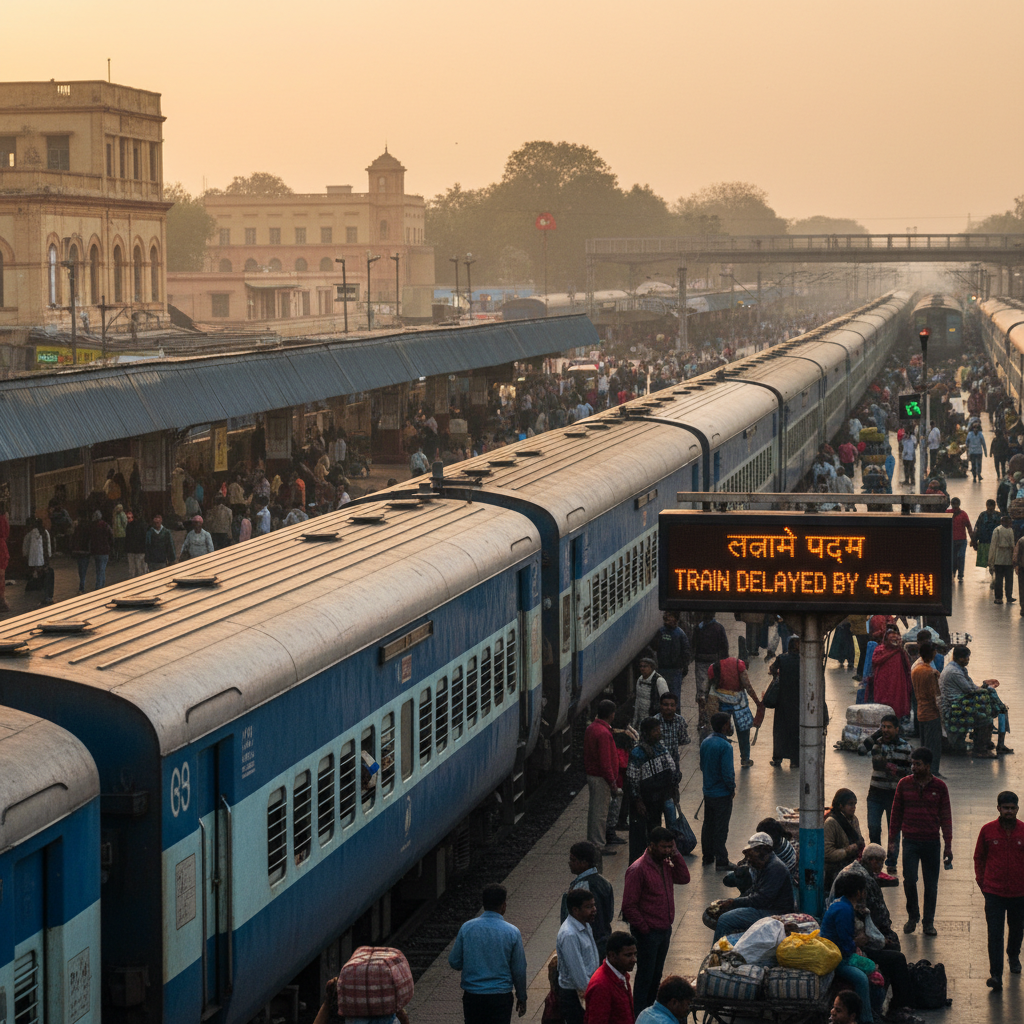
IRCTC Train Delay Refund Rules: Your Guide to Compensation
Train journeys in India are an integral part of travel, offering convenience and connectivity across the vast landscape. However, sometimes delays, cancellations, or diversions can disrupt travel plans, causing inconvenience to passengers. Indian Railways (IRCTC) has a clear set of rules for providing refunds in such situations, ensuring passengers are compensated for services not rendered as promised.
Understanding these rules can help you navigate the process efficiently and claim any eligible refunds. This guide will walk you through the various scenarios where you can claim a refund for train delays, cancellations, or diversions, whether you hold an e-ticket or a counter ticket.
What is the IRCTC Refund Policy for Train Delays and Cancellations?
Indian Railways aims to provide timely service, but operational challenges, weather conditions, or unforeseen events can lead to disruptions. Recognising this, IRCTC has established a comprehensive refund policy. The core principle is that if the railway fails to provide the service for which a ticket was purchased, or if the service is significantly altered, passengers are entitled to a refund.
This policy covers various situations, from minor delays to complete train cancellations. The specific refund amount and process depend on the duration of the delay, the type of ticket (e-ticket or counter ticket), and whether the journey commenced.
Key Terms to Understand
Before diving into the specifics, let's clarify some common terms related to train tickets and refunds:
- PNR (Passenger Name Record): A unique 10-digit number assigned to each ticket booking, used for tracking and managing your reservation.
- E-ticket: A ticket booked online through the IRCTC website or app.
- Counter Ticket: A physical ticket purchased from a railway station booking counter.
- TDR (Ticket Deposit Receipt): An online application filed for claiming refunds for e-tickets under specific circumstances.
- Filing a TDR: The process of submitting an online request for a refund through the IRCTC portal.
Refund Rules for Train Delays
Delays are common occurrences in Indian Railways. Here’s when you can claim a refund due to a train delay:
Delay at Originating Station
If your train is delayed by more than 3 hours at its originating station, and you decide not to travel, you are entitled to a full refund. This applies to:
- E-tickets: You must file a TDR online before the actual departure time of the train or within 3 hours of the scheduled departure time, whichever is earlier. For trains delayed by more than 3 hours, a TDR can be filed up to the actual departure time of the train from the originating station.
- Counter Tickets: You must surrender your ticket at the booking counter before the actual departure time of the train or within 3 hours of the scheduled departure time, whichever is earlier. For trains delayed by more than 3 hours, you can surrender your ticket at the counter up to the actual departure time of the train from the originating station.
Delay at Intermediate Stations
If the train is delayed at an intermediate station where you are supposed to board, and the delay is more than 3 hours from the scheduled departure, and you decide not to travel, you can claim a full refund. The rules for e-tickets and counter tickets are similar to those for delays at the originating station, but the TDR/ticket surrender must happen before the actual departure of the train from your boarding station.
Connecting Train Delays
If you have a connecting journey and your first train is delayed, causing you to miss the connecting train, you may be eligible for a refund for the unused portion of your journey. This typically requires filing a TDR with proper justification or approaching the station master for a manual refund. Documentation proving the delay of the first train is crucial.
Important Note: If you travel despite the delay, no refund is typically provided for the delay itself. The refund is for not undertaking the journey due to the significant delay.
Refund Rules for Train Cancellations
When a train is cancelled by Indian Railways, passengers are entitled to a full refund of their ticket fare. The process for claiming this refund is generally straightforward:
- E-tickets: For e-tickets booked online, the refund is usually processed automatically by IRCTC to the original payment source. You do not need to file a TDR or take any action. The refund typically appears in your account within 3-7 working days.
- Counter Tickets: For counter tickets, you must surrender your ticket at the reservation counter up to three days (72 hours) from the scheduled departure of the train. The refund will be issued immediately at the counter.
Refund Rules for Train Diversions
Diversion means the train takes an alternative route, bypassing some of its scheduled stops. If your train is diverted, your refund eligibility depends on whether your boarding or destination station is affected:
- Boarding Station Bypassed: If your scheduled boarding station is not covered due to the diversion, you are entitled to a full refund. For e-tickets, you can file a TDR, and for counter tickets, you can surrender your ticket within the stipulated time at any PRS counter.
- Destination Station Bypassed: If your destination station is not covered due to the diversion, you are entitled to a full refund. The process is similar to the above – TDR for e-tickets, surrender for counter tickets.
- Partial Diversion (No Impact on Boarding/Destination): If the train is diverted but still covers your boarding and destination stations, you are generally not entitled to a refund, as the service is still rendered.
Refund Rules for Missed Connections / Terminating Short
Train Terminating Short of Destination
If your train is terminated at an intermediate station, short of your booked destination, and you decide not to travel further, you are entitled to a full refund for the unused portion of your journey. The rules are:
- E-tickets: File a TDR online, stating the reason for termination short of destination.
- Counter Tickets: Obtain an Endorsement Certificate from the Station Master at the terminating station and then apply for a refund at any PRS counter or by sending the original ticket and certificate to IRCTC.
Missed Connecting Train
If your first train is delayed, causing you to miss a connecting train on a separate ticket, you may be eligible for a refund for the second (missed) leg. This is a common pain point for travelers. To claim a refund:
- Immediate Action: Report the situation to the Station Master at the junction where you missed your connection. Request an endorsement on your ticket. You will likely need to surrender the ticket for the missed train within a few hours of the connecting train's departure.
- E-tickets: File a TDR specifying that the connecting train was missed due to the delay of the first train. Attach supporting documents or a copy of the delayed train's PNR if possible.
- Counter Tickets: With the Station Master's endorsement, you can usually claim a refund at the counter.
Refund Rules for Different Ticket Types
E-Tickets (Online Bookings)
Most refunds for e-tickets are automatically processed by IRCTC for cancellations or significant delays if you haven't travelled. If manual action is required, you must file a TDR.
How to File a TDR:
- Log in to your IRCTC account.
- Go to 'My Transactions' -> 'Booked Ticket History'.
- Select the PNR for which you want to file a TDR.
- Click on 'File TDR' and select the appropriate reason (e.g., 'Train delayed by more than 3 hours', 'Train cancelled').
- Submit the TDR.
IRCTC will verify the claim, and if approved, the refund will be credited to the account used for booking within 5-7 working days, though it can sometimes take longer.
Counter Tickets (Offline Bookings)
For physical tickets bought at the station, the refund process is manual:
- Surrender Ticket: You must physically surrender your ticket at the Passenger Reservation System (PRS) counter at any railway station.
- Time Limits: Adhere strictly to the time limits (e.g., within 3 days for cancellations, before train departure for delays).
- Endorsement: For situations like short termination or missed connections, ensure you get an endorsement from the Station Master on your ticket.
Common Scenarios and Refund Eligibility Table
| Scenario | E-Ticket Refund Process | Counter Ticket Refund Process | Eligibility |
|---|---|---|---|
| Train Cancelled | Automatic full refund. | Surrender within 3 days of scheduled departure. | Full refund if train cancelled. |
| Train Delayed > 3 hrs (Origin) | File TDR before actual departure. | Surrender at counter before actual departure. | Full refund if passenger does not travel due to delay > 3 hours. |
| Train Delayed > 3 hrs (Inter.) | File TDR before actual departure from boarding station. | Surrender at counter before actual departure from boarding station. | Full refund if passenger does not travel due to delay > 3 hours at boarding point. |
| Train Diverted (Dest. Bypassed) | File TDR for non-commencement of journey. | Surrender at counter. | Full refund if booked destination not covered by diverted route. |
| Train Terminating Short | File TDR for 'Train terminated short of destination'. | Get endorsement, then refund at counter/via mail. | Refund for unused portion of journey. |
| Missed Connecting Train | File TDR explaining reason (delay of first train). | Get endorsement from Station Master of junction station. | Refund for the unused portion (missed train) if due to delay of first train. Requires proof. |
| RAC/Waitlisted Ticket (Not Confirmed) | Automatic full refund if ticket remains unconfirmed after chart prep. | Automatic full refund at counter if ticket remains unconfirmed. | Full refund if RAC/WL ticket is not confirmed and passenger does not travel. |
Common Mistakes to Avoid When Claiming a Refund
- Missing Deadlines: The biggest mistake is not adhering to the specified time limits for filing TDRs or surrendering tickets. Even a slight delay can lead to forfeiture of your refund.
- Not Filing TDR for E-tickets: While many refunds are automatic, some situations (like delays where you decide not to travel) require a TDR. Not filing one means no refund.
- Not Getting Endorsement (Counter Tickets): For complex scenarios like short termination or missed connections, a Station Master's endorsement on your counter ticket is crucial proof. Without it, your claim might be rejected.
- Incomplete Information: When filing a TDR, ensure all details are accurate and the reason selected matches your situation. Provide any supporting information if prompted.
- Discarding Ticket Information: Even if you don't travel, keep your PNR details, ticket printouts, or original counter tickets until the refund is successfully processed.
- Assuming Automatic Refund for All Cases: Only cancellations are typically fully automatic for e-tickets. Other situations often require passenger action.
Conclusion
While train travel offers many advantages, it's reassuring to know that Indian Railways has a structured system in place for refunds when things don't go as planned. By understanding the IRCTC refund rules for train delays, cancellations, and diversions, passengers can confidently claim their rightful compensation. Always remember to act within the stipulated timeframes and provide accurate information to ensure a smooth refund process.